“Ordered Friday, arrived Tuesday. Lot code on the vial matched the COA they emailed. Cold-chain packaging held up well — vials were still cool when they arrived.”
Devon K · Winnipeg✓ verified
Systemic recovery and inflammation control.
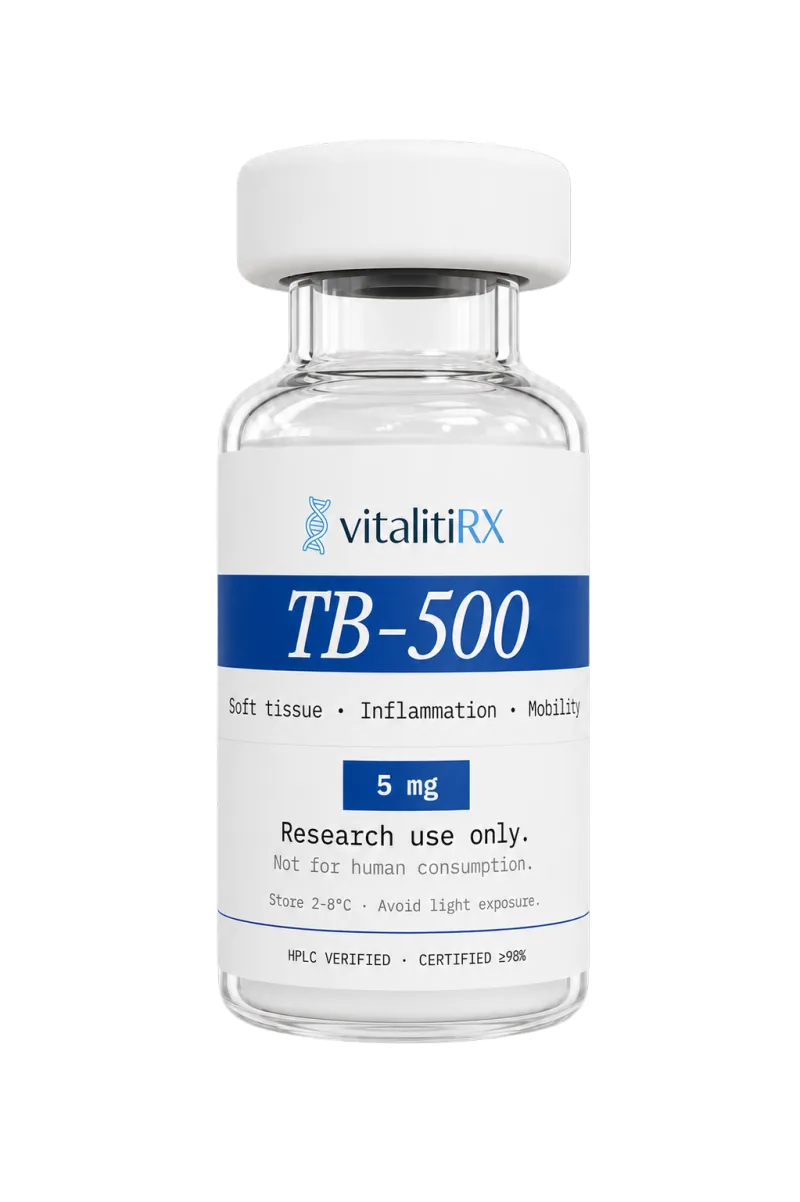
TB-500 is a synthetic fragment of thymosin β4, a naturally occurring 43-amino-acid protein found throughout human tissue. The fragment retains the biologically active region associated with actin regulation* and cell migration.
Preclinical studies have explored TB-500 for systemic recovery* — meaning that unlike locally acting compounds, it is typically investigated for its ability to circulate and support repair across multiple tissue types simultaneously.
Researchers have paired TB-500 with BPC-157 in preclinical models on the rationale that the two peptides address distinct but complementary* repair mechanisms: one local, one systemic.
Every lot is independently tested before it ships. The document shown is an example of the format. The COA for your exact lot comes by email.
Get your lot's COA by email →Only the amount of material. Both hold the same compound from the same synthesis and testing process. The 10mg vial is $88.99 against $69.99 for 5mg, so each milligram costs 36% less ($8.90 vs $14.00).
Read the guide: TB-500 5mg vs 10mg →Not exactly. TB-500 is a synthetic peptide based on thymosin β4, a 43-amino-acid protein. The name is not used consistently across the market, so the identity result on the COA for your lot is what confirms the molecule in the vial.
They are different peptides. TB-500 is a synthetic peptide based on thymosin β4. BPC-157 is a 15-amino-acid sequence derived from a peptide found in gastric juice. The two are also sold together as the BPC + TB Stack, in two separate vials.
Read the guide: BPC-157 vs TB-500 →A lyophilized (freeze-dried) powder in a sealed vial labelled with its lot code and expiration date. Freeze-drying removes the water, which keeps the peptide stable in storage.
Read the guide: What does lyophilized mean? →Keep sealed vials refrigerated at 2–8°C and away from light. Let a cold vial reach room temperature before opening it, so moisture does not condense on the powder.
Read the guide: How to store research peptides →Each batch is tested by an independent third-party lab. The COA for your lot is available by email on request: send the lot code printed on your vial to contact@vitalitipeptide.com.
Read the guide: How to read a peptide COA →It ships from within Canada. Orders placed before 2pm EST on a weekday ship the same business day; most addresses receive them next day or in 1–2 business days, and northern or remote postal codes usually take 4–5 business days. Shipping is a $15 flat rate, free over $300; subscriptions ship for $7.50, free over $150.
Read the guide: Peptide shipping in Canada →No. It is sold for laboratory research use only. It has not been evaluated or approved by Health Canada and is not for human consumption.
“Ordered Friday, arrived Tuesday. Lot code on the vial matched the COA they emailed. Cold-chain packaging held up well — vials were still cool when they arrived.”
“Bought TB-500 after running BPC-157 from vitalitiRX for a couple cycles. Same packaging quality, same COA process, same lot-level traceability. Consistency is the thing I appreciate most.”
“Quality is what I'd expect at this price tier. The COA workflow is the standout — I've ordered the same compound from two other suppliers and neither would even tell me the lot number.”
reviews describe product + service only — purity, packaging, lot traceability, fulfilment, COA access. per health canada guidance, claims about diagnosis, treatment, or specific outcomes are edited out before publication.
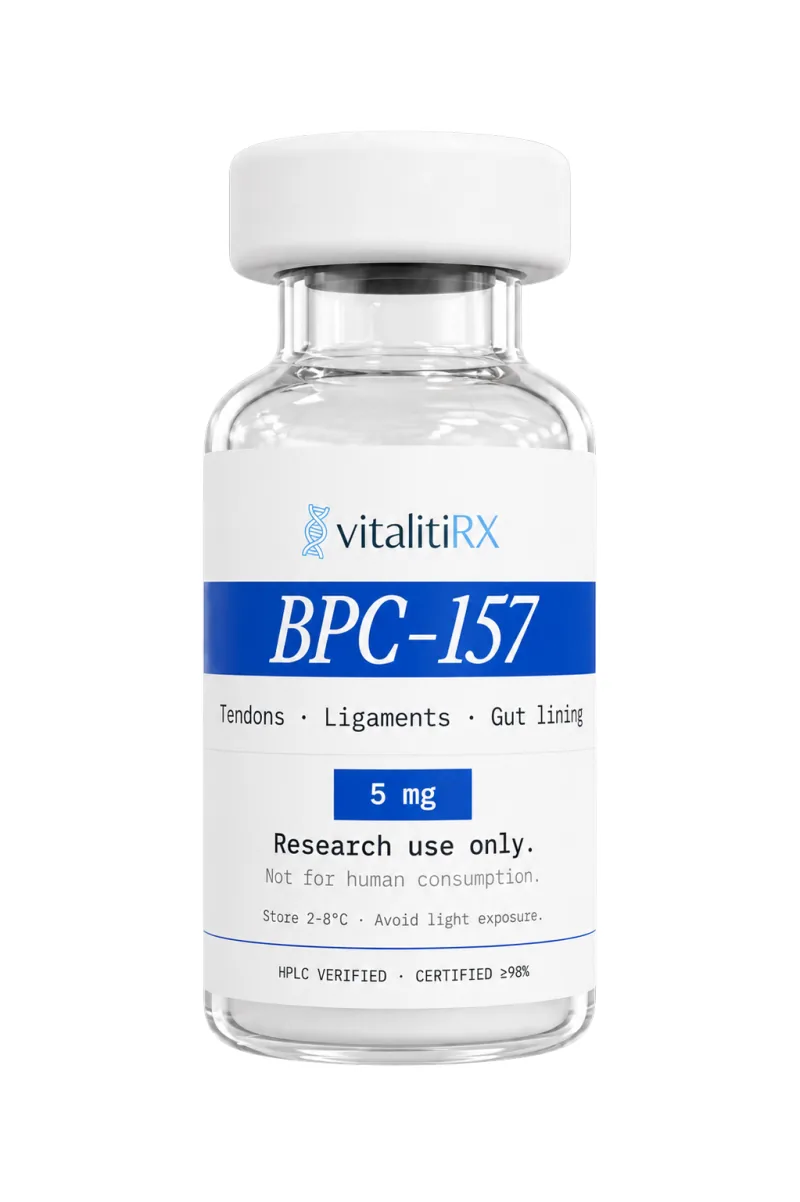
The connective tissue repair peptide.
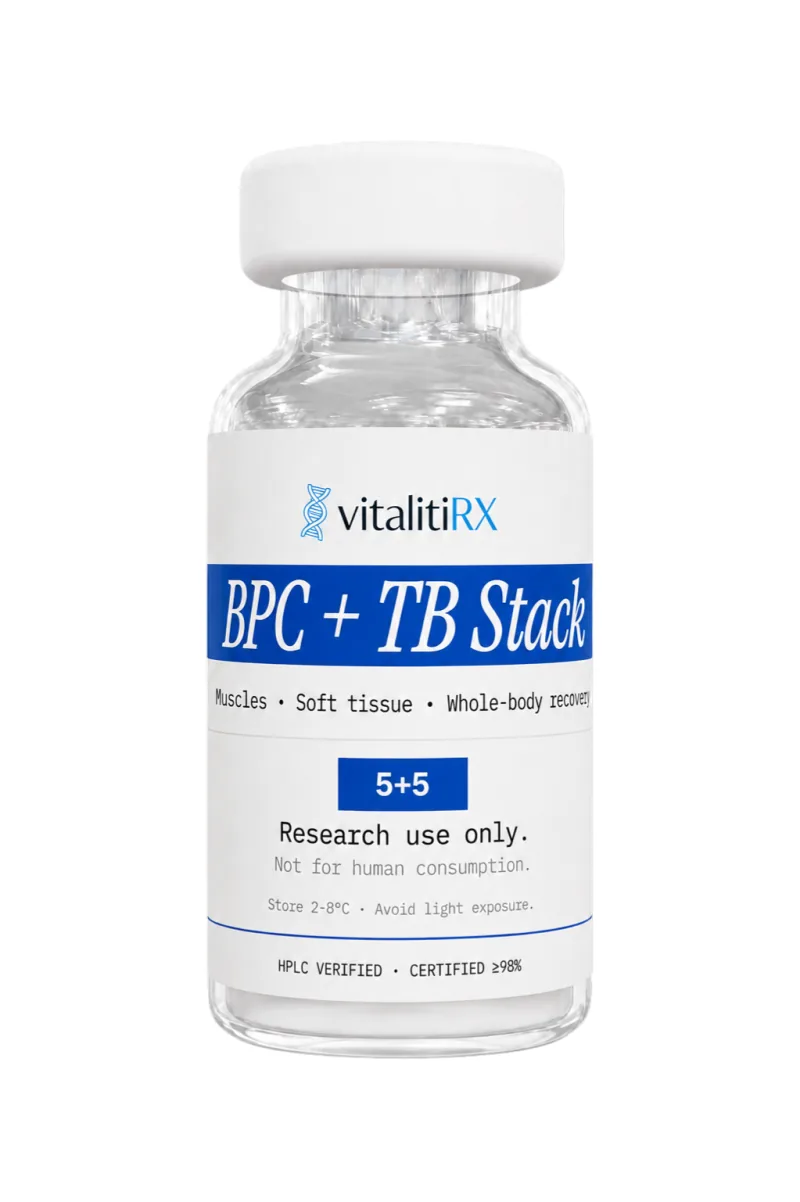
Local precision meets systemic coverage.